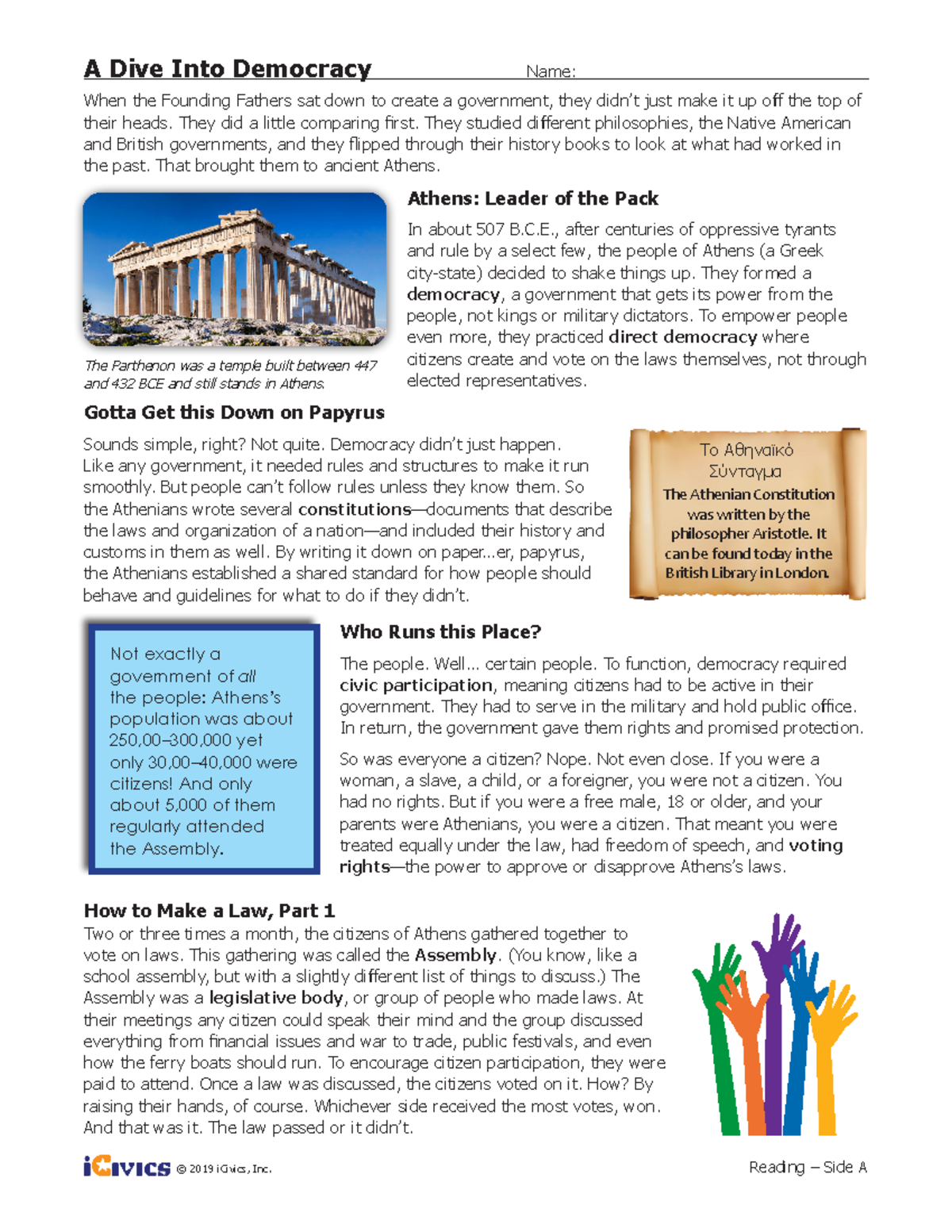

Understanding the foundations of civic engagement is a cornerstone of modern education, and finding the right resources to guide this journey is essential for both teachers and students. When educators utilize comprehensive materials like the Dive Into Democracy Worksheet Answer Key, they provide a roadmap for students to navigate the complexities of government structures, voting rights, and the responsibilities of citizenship. This blog post explores the intricate details of democratic principles while serving as a supplemental guide for those seeking to verify their understanding of these critical concepts.
The Importance of Civic Literacy in the Modern Era
Civic literacy is more than just knowing the names of political figures; it is the ability to participate effectively in the democratic process. In an age where information is abundant but often conflicting, having a reliable educational framework is vital. The Dive Into Democracy curriculum is designed to break down dense political theories into digestible lessons for students of all ages.

By utilizing a structured approach, learners can explore how laws are made, how the balance of power maintains stability, and why individual voices matter. Using a Dive Into Democracy Worksheet Answer Key allows for immediate feedback, which is a proven method for reinforcing long-term retention of complex social studies topics.
- Critical Thinking: Students learn to analyze policies rather than just memorizing facts.
- Historical Context: Understanding the evolution of democracy from Ancient Greece to the modern day.
- Active Participation: Encouraging students to envision their role in local and national governance.
Breaking Down the Dive Into Democracy Curriculum
The curriculum typically covers several "pillars" of democratic thought. Each section of the worksheet is designed to challenge the student's perception of power and authority. When looking at the Dive Into Democracy Worksheet Answer Key, one will notice a focus on the interaction between the three branches of government: Executive, Legislative, and Judicial.
This separation of powers is a recurring theme. The worksheets often prompt students to identify which branch is responsible for specific actions, such as declaring war, interpreting the constitution, or signing bills into law. Understanding these distinctions prevents the centralization of power, a core tenet of democratic theory.
💡 Note: While answer keys are excellent for self-grading, the true value lies in the discussions that arise from differing interpretations of democratic values.
Key Concepts Covered in the Worksheets
To help you navigate the material, we have categorized the primary concepts found within the worksheets. These topics form the backbone of the Dive Into Democracy Worksheet Answer Key and are essential for any student of political science.
| Topic Category | Key Concepts Included | Learning Objective |
|---|---|---|
| Foundational Documents | Constitution, Bill of Rights, Declaration of Independence | Identify the legal origins of democratic rights. |
| The Electoral Process | Primaries, General Elections, Electoral College | Understand how leaders are chosen. |
| Citizenship Duties | Voting, Jury Duty, Paying Taxes, Community Service | Differentiate between rights and responsibilities. |
| Global Democracies | Parliamentary vs. Presidential systems | Compare US democracy with international models. |
How to Use the Answer Key Effectively
The Dive Into Democracy Worksheet Answer Key should be used as a secondary tool. Educators recommend that students first attempt the questions based on their readings and classroom lectures. Once the initial attempt is complete, the answer key serves to identify gaps in knowledge.
For example, if a student consistently misses questions regarding the checks and balances system, it indicates a need for a deeper dive into the specific powers of the Supreme Court versus Congress. Using the key as a diagnostic tool rather than a shortcut ensures a much more robust educational experience.

Furthermore, many of the questions in the Dive Into Democracy series are open-ended. While the Dive Into Democracy Worksheet Answer Key provides "ideal" answers, teachers should encourage students to defend their logic, especially when discussing civil liberties and modern social issues.
Detailed Analysis of Democratic Branches
A significant portion of the worksheet focuses on the mechanics of government. Let’s look at the specific roles often highlighted in the Dive Into Democracy Worksheet Answer Key:
The Legislative Branch
This branch is primarily responsible for creating laws. It consists of the House of Representatives and the Senate. Worksheets often ask about the “Great Compromise” and why the bicameral system was created to balance the interests of large and small states.
The Executive Branch
Led by the President, this branch carries out and enforces laws. Important concepts here include the veto power, the role of the Cabinet, and the President’s position as Commander-in-Chief. The Dive Into Democracy Worksheet Answer Key clarifies the limits of executive orders and the process of impeachment.
The Judicial Branch
The court system interprets the laws. The most critical concept here is Judicial Review, established by Marbury v. Madison. Students must understand that the Supreme Court has the power to declare laws unconstitutional, serving as a final check on the other two branches.
⚠️ Note: Term limits for the Executive branch are often confused with the lifetime appointments of the Judicial branch; the answer key helps clarify these specific constitutional mandates.
Rights and Responsibilities of a Citizen
One of the most engaging sections of the Dive Into Democracy series involves the Bill of Rights. The Dive Into Democracy Worksheet Answer Key provides specific examples of how these amendments apply to everyday life. It isn't just about knowing the First Amendment protects free speech; it’s about understanding the limits of that speech in a public forum.
Students are often asked to distinguish between Rights (what you are allowed to do) and Responsibilities (what you should do). While you have the right to a fair trial, you have the responsibility to serve on a jury to ensure others receive that same right.
- Freedom of Assembly: The right to gather peacefully.
- Right to Petition: The ability to ask the government for change without fear of punishment.
- Due Process: The legal requirement that the state must respect all legal rights owed to a person.
The Role of Media in a Democracy
Modern versions of these worksheets often include a section on the "Fourth Estate"—the media. In a healthy democracy, the press acts as a watchdog, keeping the government transparent. The Dive Into Democracy Worksheet Answer Key might explore concepts like freedom of the press and the challenges of "fake news" in a digital age.
Understanding how to vet sources and recognize bias is a critical modern skill. When students use the Dive Into Democracy Worksheet Answer Key to check their work on media literacy, they learn that democracy depends on an informed electorate capable of discerning fact from opinion.

Historical Milestones in Democratic Progress
The worksheets don't just look at the current state of affairs; they also travel back in time. The Dive Into Democracy Worksheet Answer Key frequently references pivotal moments that expanded the definition of "we the people."
Key historical milestones often included are:
- The 15th Amendment: Granting the right to vote regardless of race.
- The 19th Amendment: Granting women the right to vote.
- The Civil Rights Act of 1964: Ending segregation in public places and banning employment discrimination.
- The 26th Amendment: Lowering the voting age to 18.
By studying these milestones, students realize that democracy is an evolving experiment rather than a static set of rules. The answer key helps ensure that dates, names, and the specific impact of these legislations are recorded accurately by the learner.
Encouraging Civic Participation Beyond the Classroom
The ultimate goal of the Dive Into Democracy program is to inspire action. Whether it is through volunteering, participating in a mock trial, or attending a local city council meeting, the concepts found in the Dive Into Democracy Worksheet Answer Key are meant to be applied in the real world.
Teachers can use the worksheets to spark debates on current events. For instance, comparing the historical "Voting Rights Act" to modern discussions on voter ID laws allows students to see how the democratic principles they are learning are still being debated and shaped today.
📌 Note: Encouraging students to write letters to their representatives is a fantastic practical application of the 'Right to Petition' found in the worksheets.
Final Thoughts on Democratic Education
Mastering the concepts within the Dive Into Democracy curriculum is an essential step for any young citizen. By using the Dive Into Democracy Worksheet Answer Key as a guide, students can solidify their understanding of how their government functions and, more importantly, how they can influence it. Education is the most powerful tool for preserving the principles of liberty and justice for all. As learners progress through the worksheets, they transition from passive observers to active participants in the democratic process, ensuring a brighter and more informed future for society as a whole. Remember that while an answer key provides the facts, your engagement and critical thinking provide the impact.
Related Terms:
- dive into democracy activities
- a dive into democracy questions