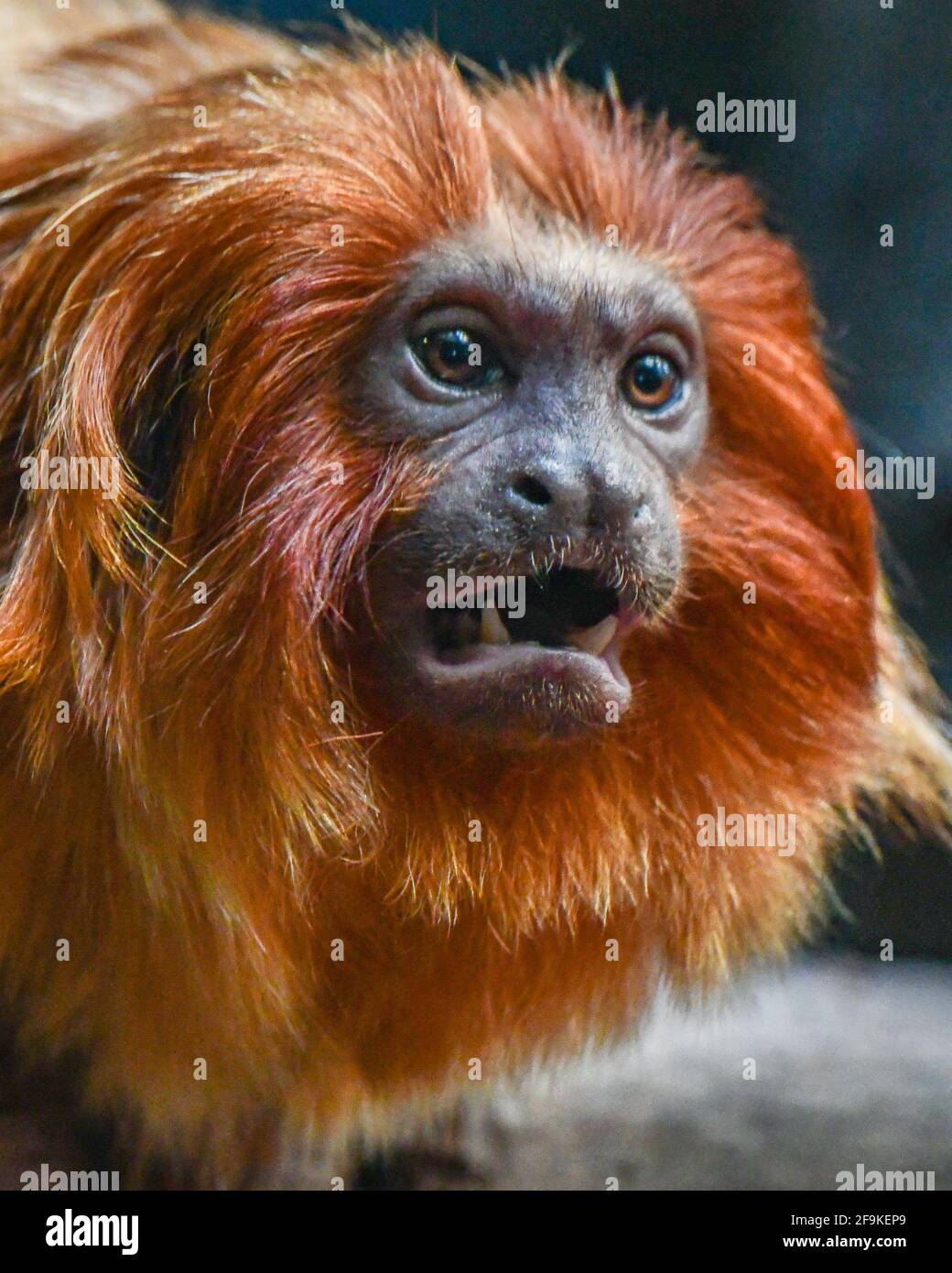

The Golden Lion Marmoset, scientifically known as *Leontopithecus rosalia*, is a small, vibrant primate native to the Atlantic coastal forests of Brazil. These enchanting creatures are renowned for their striking golden fur and distinctive lion-like mane, which has earned them their regal name. The Golden Lion Marmoset is not only a fascinating subject for wildlife enthusiasts but also plays a crucial role in the ecosystem and conservation efforts.
The Unique Characteristics of the Golden Lion Marmoset
The Golden Lion Marmoset is easily recognizable by its luxurious golden fur and the distinctive mane that encircles its face, giving it a lion-like appearance. These small primates typically measure around 24-30 cm in length, including their tail, and weigh between 500-700 grams. Their diet primarily consists of fruits, insects, and small vertebrates, making them omnivorous in nature.
One of the most intriguing aspects of the Golden Lion Marmoset is its social structure. They live in family groups consisting of a dominant breeding pair and their offspring. These groups are highly cooperative, with all members contributing to the care and protection of the young. This social behavior is essential for their survival and reproduction.
The Habitat and Distribution of the Golden Lion Marmoset
The Golden Lion Marmoset is endemic to the Atlantic coastal forests of Brazil, particularly in the states of Rio de Janeiro and São Paulo. These forests are characterized by their dense canopy and high biodiversity, providing an ideal habitat for these primates. However, their habitat is under threat due to deforestation and urbanization, which has led to a significant decline in their population.
To better understand the distribution and habitat requirements of the Golden Lion Marmoset, conservationists have conducted extensive studies. These studies have revealed that the marmosets prefer areas with dense vegetation and a variety of food sources. They are also known to inhabit secondary forests and fragmented habitats, although these are not as ideal as primary forests.
Conservation Efforts for the Golden Lion Marmoset
Due to the declining population of the Golden Lion Marmoset, several conservation efforts have been initiated to protect these primates and their habitat. One of the key initiatives is the establishment of protected areas and reserves. These areas provide a safe haven for the marmosets, allowing them to thrive without the threat of human interference.
Another crucial aspect of conservation is captive breeding programs. These programs aim to increase the population of Golden Lion Marmosets in captivity and eventually reintroduce them into the wild. Captive breeding programs are essential for maintaining genetic diversity and ensuring the long-term survival of the species.
Community involvement is also a vital component of conservation efforts. Local communities are educated about the importance of the Golden Lion Marmoset and the need to protect their habitat. This includes promoting sustainable practices and reducing deforestation. By involving the community, conservationists can create a more sustainable future for these primates.
Challenges Faced by the Golden Lion Marmoset
The Golden Lion Marmoset faces several challenges that threaten its survival. One of the primary threats is habitat loss due to deforestation. The destruction of their natural habitat not only reduces their food sources but also makes them more vulnerable to predators and diseases.
Another significant challenge is the illegal pet trade. The Golden Lion Marmoset's striking appearance makes it a popular choice for the pet trade, leading to the capture and sale of these primates. This illegal activity further depletes their wild population and disrupts their social structure.
Climate change is also a growing concern for the Golden Lion Marmoset. Changes in temperature and rainfall patterns can affect their habitat and food sources, making it difficult for them to survive. Conservationists are working to mitigate these effects by promoting sustainable practices and protecting their habitat.
The Role of the Golden Lion Marmoset in the Ecosystem
The Golden Lion Marmoset plays a crucial role in the ecosystem of the Atlantic coastal forests. As omnivores, they help in seed dispersal and pollination, which is essential for the regeneration of the forest. Their diet includes a variety of fruits, and as they move through the forest, they disperse seeds through their droppings, aiding in the growth of new plants.
Additionally, the Golden Lion Marmoset helps control insect populations, which can be detrimental to the forest ecosystem if left unchecked. By feeding on insects, they contribute to the balance of the ecosystem and ensure the health of the forest.
Their social behavior also has ecological implications. The cooperative nature of their family groups ensures that the young are well-cared for, increasing their chances of survival. This, in turn, helps maintain a stable population of Golden Lion Marmosets, which is essential for the overall health of the ecosystem.
Research and Studies on the Golden Lion Marmoset
Extensive research has been conducted on the Golden Lion Marmoset to better understand their behavior, habitat requirements, and conservation needs. These studies have provided valuable insights into their social structure, diet, and reproductive behavior. For example, research has shown that the Golden Lion Marmoset has a complex social hierarchy, with the dominant breeding pair playing a crucial role in the group's dynamics.
Studies have also revealed that the Golden Lion Marmoset is highly adaptable, able to thrive in both primary and secondary forests. However, their preference for dense vegetation and a variety of food sources makes primary forests their ideal habitat. This information is crucial for conservation efforts, as it helps identify the areas that need protection and restoration.
Research on their reproductive behavior has shown that the Golden Lion Marmoset has a relatively long gestation period, with females giving birth to twins after a gestation period of about 125 days. This information is essential for captive breeding programs, as it helps in planning and managing the breeding process.
Educational Programs and Awareness
Educational programs and awareness campaigns are essential for the conservation of the Golden Lion Marmoset. These initiatives aim to educate the public about the importance of these primates and the need to protect their habitat. By raising awareness, conservationists can garner support for their efforts and encourage sustainable practices.
Schools and educational institutions play a crucial role in these programs. They provide a platform to teach children about the Golden Lion Marmoset and the importance of conservation. Through interactive sessions, field trips, and educational materials, children can learn about these fascinating primates and the challenges they face.
Community outreach programs are also effective in raising awareness. These programs involve local communities in conservation efforts, educating them about the importance of the Golden Lion Marmoset and the need to protect their habitat. By involving the community, conservationists can create a more sustainable future for these primates.
Future Prospects for the Golden Lion Marmoset
The future of the Golden Lion Marmoset depends on the success of conservation efforts and the implementation of sustainable practices. With continued support and dedication, it is possible to protect these primates and their habitat, ensuring their survival for future generations.
Conservationists are optimistic about the future of the Golden Lion Marmoset, given the progress made in recent years. The establishment of protected areas, captive breeding programs, and community involvement have all contributed to the conservation of these primates. However, there is still much work to be done, and continued efforts are essential to ensure their long-term survival.
Research and studies will continue to play a crucial role in the conservation of the Golden Lion Marmoset. By understanding their behavior, habitat requirements, and conservation needs, conservationists can develop more effective strategies to protect these primates and their habitat.
Educational programs and awareness campaigns will also remain essential for the conservation of the Golden Lion Marmoset. By educating the public and involving local communities, conservationists can create a more sustainable future for these primates and ensure their survival for generations to come.
In conclusion, the Golden Lion Marmoset is a fascinating and important species that plays a crucial role in the ecosystem of the Atlantic coastal forests of Brazil. Despite the challenges they face, conservation efforts are making progress in protecting these primates and their habitat. With continued support and dedication, the future of the Golden Lion Marmoset looks promising, ensuring their survival for future generations.
📌 Note: The information provided in this blog post is based on current research and conservation efforts. For the most accurate and up-to-date information, it is recommended to consult with wildlife conservation organizations and experts.
Related Terms:
- golden lion tamarin endangered species
- golden lion tamarin appearance
- golden lion tamarin characteristics
- golden lion tamarin taxonomy
- golden lion tamarin monkey facts
- golden lion tamarin interesting facts